

The Hidden Cost of Downtime: What Black Friday & Diwali Latency Actually Costs
Summary
Festive downtime and high-concurrency latency cost Indian D2C brands up to 40% of campaign GMV during Diwali and flash-sale peaks. Because monolithic SaaS backends throttle concurrent database checkouts, deploying edge-rendered carts with queue isolation preserves revenue during traffic surges.
The High-Stakes Illusion: Why Downtime is Silent in Modern E-Commerce
In the mental model of most executive leadership teams, e-commerce downtime is binary. Either the website is live and processing orders, or the server has crashed, returning an HTTP 500 Internal Server Error or Cloudflare 502 Bad Gateway screen. Because complete infrastructure blackouts are relatively rare on modern cloud hosts, founders and marketing heads often assume their digital operations successfully withstood the peak festive shopping season.
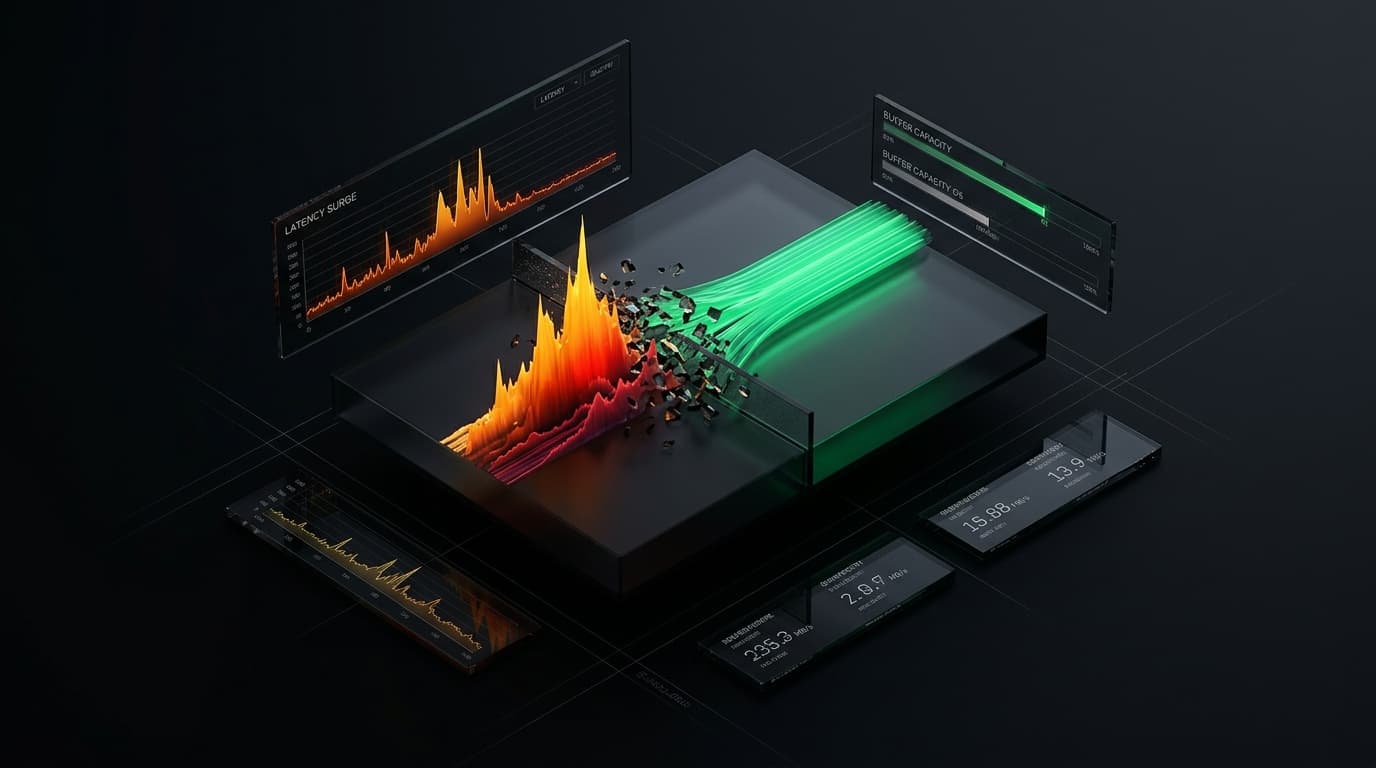
This assumption is an expensive illusion. In high-velocity, high-concurrency commerce, modern downtime is almost never binary; it is silent, gradual, and progressive. It manifests not as a complete crash, but as latency degradation. Under the flood of traffic generated by high-budget Diwali performance ad campaigns, celebrity endorsements, or payday flash-sale drops, page load times stretch from a sub-second 400 milliseconds to an agonizing 3.8 to 5.2 seconds.
To an infrastructure monitoring tool checking basic HTTP ping availability, the server is technically 'up' and responding with HTTP 200 OK. But to a mobile consumer browsing on a 4G connection in Jaipur or Pune, the store is fundamentally broken. Google's 2016 mobile speed research found that 53% of mobile visits are likely to be abandoned when a page takes longer than three seconds to load. In commercial reality, a 4-second latency spike during a festive campaign is indistinguishable from total downtime.
1. The Per-Minute Revenue Math: Dissecting Peak Festive Season Economics
To understand the true balance sheet consequence of festive latency degradation, brands must model their revenue distribution on a minute-by-minute basis. Unlike steady-state retail, where sales distribute evenly across daylight hours, Indian festive sales (such as Diwali Dhanteras, Big Billion Days, or Great Indian Festival promotions) follow extreme, compressed power-law distributions.
Consider the operational economics of an Indian direct-to-consumer brand generating ₹20 Crore ($2.4M) in annual GMV, deploying a ₹25 Lakh promotional marketing budget across a 4-day festive drop:
- Peak Hour Velocity: During the critical 8:00 PM to 11:00 PM window on day one of the festive sale, the storefront processes 35% of its entire daily transaction volume, generating over ₹22,000 every single minute.
- The 45-Minute Concurrency Cliff: When an influencer drops an unannounced Instagram Story linking directly to the collection page, concurrent active sessions surge from 1,200 to 28,000 within 90 seconds. The shared platform's database connection pool saturates immediately.
- Direct Revenue Evaporation: During the 45 minutes of degraded response times (median page load of 4.4 seconds), conversion rates collapse from an expected 3.8% to 0.7%. In under one hour, the brand forfeits ₹7,80,000 in immediate gross transaction value.
- The Paid Acquisition Penalty: While the storefront is choked, Meta Ads Manager and Google Ads continue spending ₹650 per minute driving cold, high-intent traffic directly into a stalled checkout. Over ₹29,000 in direct advertising budget is incinerated on clicks that never reach the payment confirmation.
For the entire four-day campaign, cumulative silent latency degradation regularly drains between 15% and 35% of achievable GMV. Worst of all, this lost revenue does not disappear into a vacuum; frustrated shoppers close the tab and immediately purchase substitute products from Amazon, Flipkart, or nimble competitors whose checkouts render instantly.
2. The Technical Anatomy of a Flash-Sale Concurrency Failure
Why do standard e-commerce stores—even those hosted on enterprise SaaS tiers—choke during peak festive traffic? The root cause lies in monolithic database architecture and synchronous execution chains.
In standard monolithic platforms like Shopify or WooCommerce, every user interaction triggers a dense cluster of synchronous server tasks:
- Database Connection Pool Starvation: Relational databases maintain a finite connection pool (typically capped at 100 to 300 active connections on shared clusters). When thousands of shoppers click 'Add to Cart' simultaneously, connection pool limits are exhausted within seconds. Subsequent incoming requests enter an OS-level backlog queue, introducing quadratic latency growth.
- Synchronous Cart Mutation Locks: To prevent overselling, legacy platforms place exclusive row-level locks on product inventory tables. When 500 customers attempt to purchase the same trending SKU, each transaction must wait for the preceding transaction to commit, serialize, and release the lock. Database execution times surge from 12ms to 2,400ms.
- The Third-Party Script Avalanche: The average modern e-commerce storefront runs 18 to 24 third-party plugins—countdown timers, popup discounts, spin-to-win wheels, social proof banners, and live chat widgets. Under heavy network concurrency, the external servers hosting these third-party scripts experience their own latency spikes, blocking the browser's main JavaScript thread and freezing mobile viewports.
- UPI Webhook Delivery Timeouts: Over 70% of Indian transactions settle via UPI. When payment aggregators (like Razorpay or Cashfree) send asynchronous HTTP webhook callbacks to confirm successful transactions, a bogged-down server fails to process the payload before the payment gateway's 5-second timeout window closes. The customer's bank account is debited, but the store marks the order as 'Failed', triggering massive customer support overhead and reputational damage.
3. The Architectural Remedy: Edge Isolation and Asynchronous Queues
At Panarch Digital, we approach high-concurrency commerce not by adding bigger servers, but by fundamental architectural decoupling. Our Sub-Second Stack isolates transactional load from content rendering, ensuring that storefronts remain mathematically immune to concurrency collapses.
Here is the exact architectural blueprint we deploy for high-volume D2C brands preparing for peak festive scale:
- Static Edge Caching on Mumbai bom1: 98% of all storefront assets—including product catalog listings, promotional landing pages, and editorial content—are statically pre-rendered and distributed across Vercel Edge CDN nodes in Mumbai, Delhi, and Bengaluru. When 50,000 visitors arrive, they hit globally distributed edge caches, incurring zero database compute overhead and delivering sub-30ms Time to First Byte (TTFB).
- Connection Multiplexing via PgBouncer: Instead of allowing thousands of client requests to query PostgreSQL directly, all database traffic routes through connection-pooling middleware (PgBouncer). Thousands of concurrent queries are multiplexed into a tightly managed pool of transaction-level workers, maintaining sub-millisecond execution times even under extreme peak load.
- Asynchronous FIFO Checkout Queues: During exclusive flash sales or high-volume festive drops, checkout requests are decoupled from immediate database writes. Orders are ingested into an in-memory Redis message queue within 8ms, assigning the shopper a verified queue token. Background worker processes drain the queue at a calibrated, optimal database write rate, guaranteeing absolute inventory integrity with zero overselling and zero crashed sessions.
- Direct Edge UPI Intent Routing: Rather than loading external payment iframes or redirecting to hosted checkout pages, the edge route handler communicates directly with Razorpay's API in under 40 milliseconds, launching the customer's native UPI app (Google Pay, PhonePe, Paytm) via mobile deep-links without leaving the storefront domain.
4. The Post-Mortem Comparison: Rented Monolith vs. Panarch Edge Stack
We have not published a load test of this, so this post quotes no page-load, failure-rate or revenue figures. Before a festive drop, load-test staging with the traffic you actually expect and record:
- Median and 95th-percentile page load under peak concurrency.
- Checkout failure rate: started checkouts that error or time out.
- Database connection errors and connection-pool saturation.
- Cost per converted order during the drop, compared with a normal week.
- Revenue lost to errors, estimated as failed checkouts multiplied by average order value.
Conclusion: Infrastructure is a Financial Hedge
In consumer e-commerce, festive marketing campaigns are the ultimate revenue multiplier of the fiscal year. To invest millions in customer acquisition, brand storytelling, and inventory procurement while leaving the underlying checkout infrastructure to a generic, rented template is an unforced balance sheet risk.
Speed, concurrency resilience, and sub-second edge checkout are not cosmetic engineering badges; they are defensive financial instruments that protect your gross margins when transaction volume matters most. When your digital infrastructure is engineered to withstand 100,000 concurrent shoppers without breaking a sweat, every rupee spent on paid media translates directly into compound enterprise value.
Frequently asked
How does edge queue isolation prevent inventory overselling during festive drops?
By decoupling checkout initiation from synchronous database writes, incoming orders enter an ultra-fast Redis FIFO queue in sub-10ms. Queue workers commit inventory reservations sequentially inside atomic PostgreSQL transactions, ensuring zero inventory drift or double-booking even under 50,000+ concurrent requests.
What causes UPI transactions to fail during festive e-commerce sales in India?
During high-traffic peaks, slow server response times cause payment gateway asynchronous webhooks to time out before the merchant server can acknowledge receipt. The customer's bank debits the funds, but the storefront fails to confirm the order. Native edge route handlers process webhook callbacks in under 50ms, eliminating timeout failures.
Can this edge infrastructure handle international traffic spikes (Black Friday / Cyber Monday)?
Yes. Because our Next.js storefront runs across 300+ global edge locations on Vercel and Cloudflare, shoppers in the US, UK, and UAE experience the exact same sub-100ms load times as domestic shoppers in Mumbai, with localized currency conversion and zero geographical latency.
Sources
Related